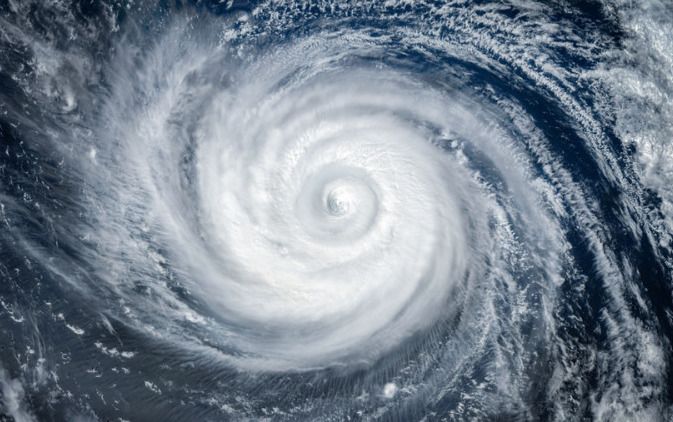
According to the World Meteorological Organization, El Nino has formed and continues to intensify. It is expected that its peak will occur at the end of 2026, while the impact of the phenomenon on global weather and climate processes may persist into early 2027.
El Nino is formed in the tropical Pacific Ocean. It affects the climate of Kazakhstan indirectly through changes in large–scale atmospheric circulation, cyclone trajectories, and air mass transport over Eurasia.
An analysis of the observational data from "Kazhydromet" RSE for 1951-2025 showed a certain pattern in the distribution of cold season precipitation in certain southern and southeastern regions of Kazakhstan during the El Nino periods. It is most pronounced in Kyzylorda, Turkestan, Zhambyl, Almaty regions and Zhetisu region. This dependence is weakening towards the northern regions of the country.
At the same time, patterns established based on long-term data do not determine the weather conditions of a particular season. The distribution of air temperature and precipitation in Kazakhstan depends on the combined influence of various atmospheric processes.
No stable dependence on El Nino has been established in Kazakhstan regarding air temperature. The temperature regime of the country, especially in its northern and eastern regions, is more closely related to the state of the Arctic and North Atlantic fluctuations, the activity of the Siberian anticyclone and other circulatory processes.
The estimates presented by the WMO characterize the impact of El Nino on global climate processes and are not forecasts of specific weather conditions for the territory of Kazakhstan.